Add your promotional text...
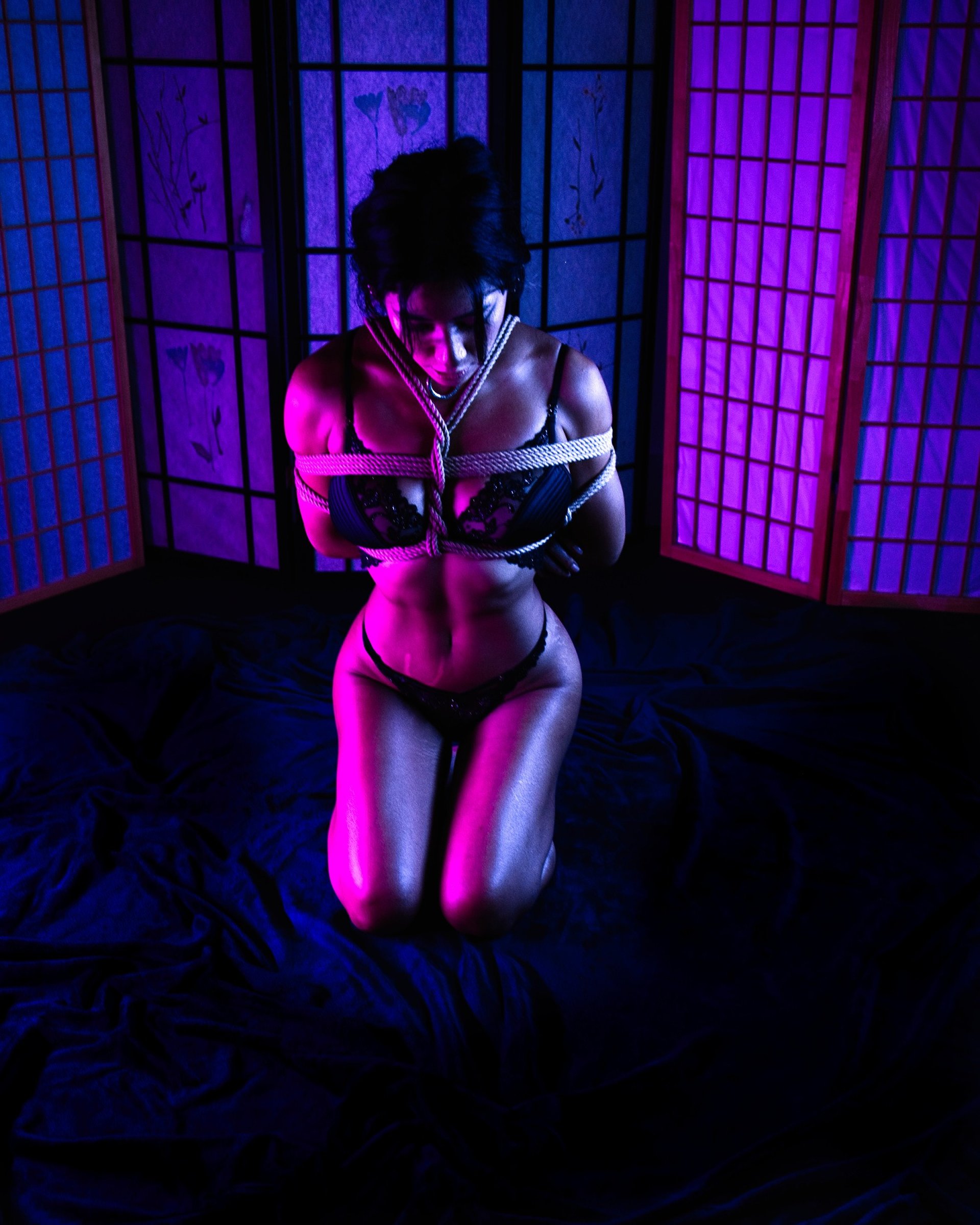


I was introduced to wax play early in my rope journey, back when I was still learning what it meant to guide someone through sensation safely and intentionally. Long before I ever picked up a camera, I was exploring how touch and temperature could change the way a body settles, breathes, and lets go. Wax was one of the first things that taught me that intensity does not have to be loud. Sometimes it is quiet. Sometimes it is slow.
Over time it simply became another part of my practice. Not a trick or an add on, just another way to work with sensation and trust. A candle, warm light, a careful hand. Less about spectacle and more about presence. As rope and photography grew into the center of my work, wax stayed alongside them as something familiar and steady.
Wax offers a different kind of sensation than being bound in rope or receiving impact play. Rope creates steady tension and containment, a constant awareness of lines against the body. Impact lands fast and decisive. Wax moves in a slower rhythm built on anticipation. The body tightens while waiting, breath catching in the space before contact. Heat touches skin, immediate and focused, then softens as it cools and hardens, allowing everything to settle again. That repeating cycle of expectation, contact, and release draws attention directly to the surface of the body, sharpening the senses and making every breath and small movement feel more vivid. The result is a quiet, grounded sensuality rooted in awareness and presence, less about restraint or endurance and more about fully inhabiting the moment.
Wax also changes how the moment looks from the outside. Where being bound in rope creates clean lines and deliberate structure, wax softens everything. Candlelight warms the room, shadows deepen, and gravity takes over, following the natural curves of the body so each pour moves differently, less patterned and less predictable than rope. The pace slows and the focus shifts from technique to texture, skin, and breath, making it feel less like something being done and more like something simply unfolding.
Waxplay was something Krhys and I had talked about more than once, not in a rushed or spontaneous way, but as a quiet interest that kept resurfacing. It felt like another way to experience sensation and trust together, a different path into the same presence we already share through rope. Because she is a working model, impact play is not always practical. Marks can linger, and that matters when your body is part of your work. Wax offered intensity without the same lasting evidence, something we could explore fully.
When the day came, we kept the setup simple and deliberate. She stood secured to the St. Andrew’s Cross, grounded and supported, the room lit by the warm glow of candles. There was no rush to begin, just the small ritual of preparation, checking temperature, choosing placement, letting the space settle so that when we started, both of us were fully present.
The first pour carried more anticipation than intensity. Even knowing what to expect, there was a visible tightening through her shoulders, that small instinctive brace before contact. When the heat touched skin, her breath caught, then slowly released as it cooled and set. The wax hardened and her body followed it down, softening into the support behind her.
Each pass repeated that rhythm. Expectation. Contact. Release. A brief spark of sensation followed by stillness. After a few rounds, the reactions grew smaller. Her breathing steadied. She stopped bracing and started receiving, letting each pour land without chasing or escaping it. What remained wasn’t endurance, but focus, the kind that comes when someone decides to stay fully present inside their own body.
As the layers built, the pace slowed even further. Color gathered and followed the natural curves of her body, shaped by gravity rather than intention, flowing and settling in ways that could never be planned or repeated. Nothing looked rigid or structured like rope. It felt organic and alive, the surface of her skin marked by warmth, texture, and the quiet aftermath of everything she had just felt.
When the last of the wax had cooled and set, I gave it time to settle before turning my attention to removing it. I started at the top with the flat edge of a knife, guiding it carefully between the hardened wax and her skin. The pressure was steady and controlled, not cutting, just separating, finding that thin boundary where the wax released from the warmth beneath it. That skin had only recently held heat, still sensitive and alive, so every pass registered clearly.
Piece by piece, the layers came away with a slow scrape and release, each stroke exposing flushed skin underneath and replacing warmth with a more tactile, grounded sensation. What had been built gradually was removed just as slowly. The energy softened from intensity to care, from sensation to connection, until she was simply standing there again, calm and steady.
When the last of the wax was gone, I unstrapped her slowly, one point at a time, letting her arms come free and her shoulders roll forward as the tension left her body. I wrapped a blanket around her and stayed close, giving her space to breathe and feel the warmth still lingering in her skin. We let the moment stretch without filling it, allowing her to reflect and simply exist in the aftermath, grounded and calm.
Moments like this are why I keep returning to practices like wax and rope. Not for intensity or spectacle, but for the way they slow everything down and create space to listen more closely to the person in front of me. They offer another path into trust, attention, and care, allowing the experience to unfold naturally and leaving us both a little more grounded than when we began.